

Sun Shine IT Solution provides custom software and mobile app development services to help businesses build scalable trading platforms based on their specific requirements.
Introduction
An on-demand trading app allows users to buy, sell, and manage financial assets directly from their smartphones or web browsers. These applications provide convenient access to trading markets, real-time price updates, portfolio management, and secure transactions. With the growing demand for digital investment platforms, businesses are increasingly investing in custom trading app development to deliver faster and more accessible trading experiences.
Developing an on-demand trading app requires a combination of real-time market data, secure transaction processing, an intuitive user interface, and reliable backend infrastructure.
Key Features of an On-Demand Trading App
A successful on-demand trading app should offer a simple and efficient trading experience. User registration and profile management allow traders to create accounts, complete verification, and manage their personal information securely. Secure login options, including two-factor authentication, help protect user accounts and sensitive information.
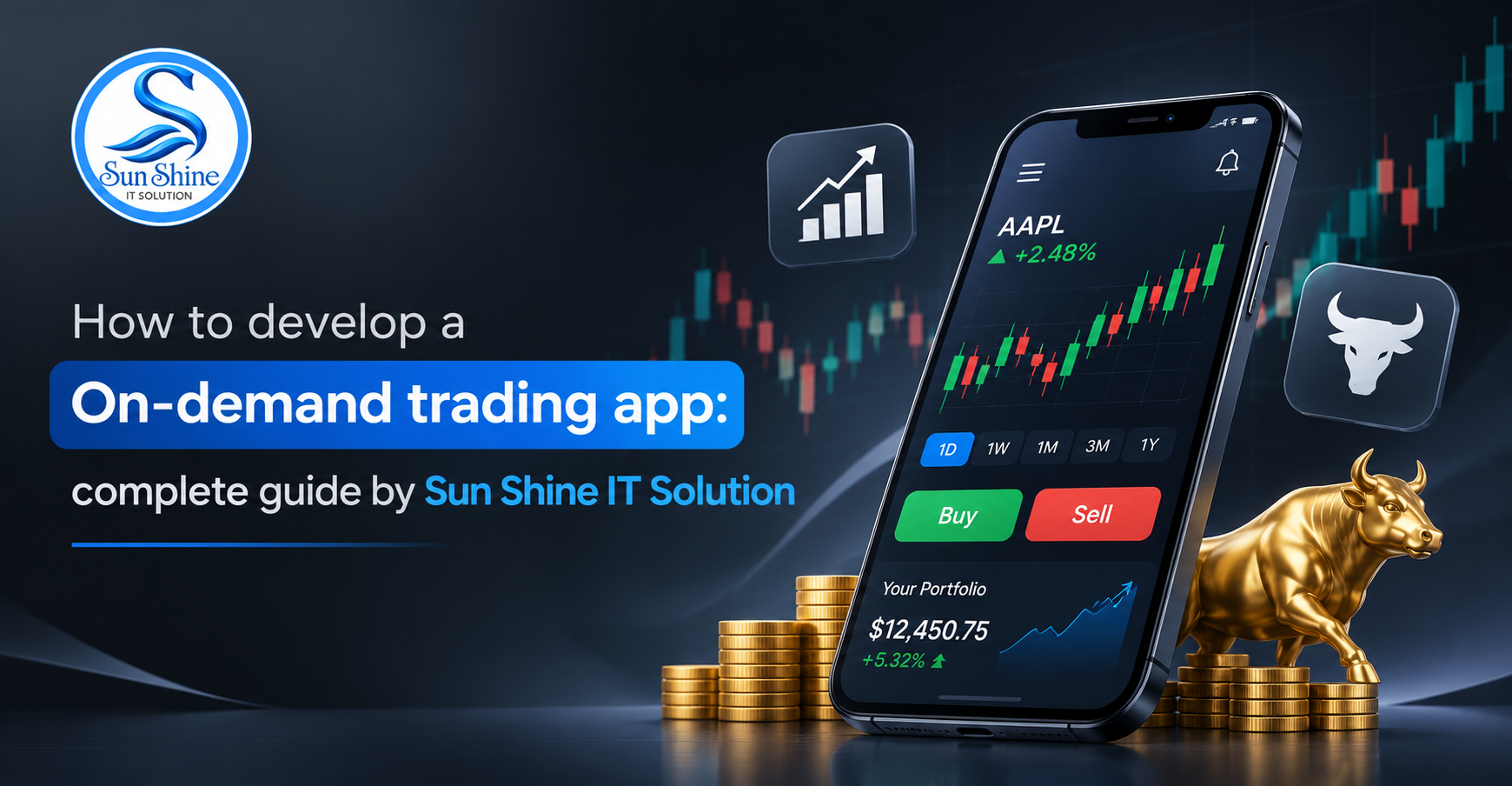
A real-time market dashboard displays live asset prices, market movements, price changes, and trading volume. Users can explore different financial instruments, search for specific assets, and view detailed market information before making trading decisions. Interactive charts and technical indicators help users understand market trends and analyze price movements.
The trading interface should allow users to place buy and sell orders conveniently. Features such as market orders, limit orders, and stop-loss orders can provide greater flexibility, depending on the supported markets and applicable regulations. A digital wallet and payment integration can help users manage deposits, withdrawals, and transaction records.
Portfolio management allows users to monitor their investments, check current holdings, review profit and loss, and track overall portfolio performance. Push notifications and price alerts keep users informed about market changes, order execution, and important account activities.
An advanced admin dashboard helps administrators manage users, monitor transactions, configure trading settings, review platform activity, and generate reports. Strong security features, data encryption, access controls, and transaction monitoring are also essential for protecting the platform and its users.
Benefits of On-Demand Trading App Development
On-demand trading apps make financial markets more accessible by allowing users to manage their investments from almost anywhere. Users can check market prices, place orders, and monitor their portfolios without depending on traditional trading methods or visiting physical offices.
For businesses, a custom trading platform creates opportunities to offer digital financial services and reach a wider audience. Automated trading workflows can reduce manual operations, improve transaction processing, and make platform management more efficient.
Real-time market information helps users respond to market movements more quickly. Portfolio tracking and performance reports also make it easier to review investment activity and understand financial performance.
A scalable trading application can support business expansion by introducing additional asset categories, advanced analytical tools, new payment methods, and more user accounts. With appropriate security and compliance measures, businesses can build a reliable digital trading environment and improve user confidence.
Step-by-Step Development Process of an On-Demand Trading App
The development process begins with understanding the business model, target audience, and trading requirements. The development team identifies which financial instruments the platform will support, such as stocks, commodities, currencies, or cryptocurrencies. The required trading features, payment methods, user roles, and operational workflows are also defined during this stage.
The next step is market research and technical planning. This includes studying competing platforms, identifying user expectations, selecting suitable technologies, and planning the application architecture. Regulatory requirements, data protection responsibilities, and any necessary financial service permissions must also be considered before development begins.
After planning, the UI and UX design process focuses on creating an easy-to-use interface. The design should make it simple for users to navigate market information, understand charts, manage their portfolios, and complete trading activities. The dashboard should present important information clearly across mobile devices and desktop screens.
Frontend development then converts the approved designs into functional web or mobile interfaces. Backend development establishes the core system responsible for user accounts, authentication, order processing, transaction records, portfolio calculations, and administrative operations. A reliable database is required to store user information, trading activity, and other platform records securely.
The next stage involves integrating market data providers, trading APIs, payment gateways, and other external services. These integrations help the application display market information and process supported trading activities. The exact integrations depend on the selected markets, service providers, and business requirements.
Security implementation and testing are essential before launch. The application should be tested for functionality, performance, usability, transaction accuracy, and security vulnerabilities. The team should also verify that market data and trading integrations work correctly under different conditions.
Once testing is complete, the application can be deployed to the selected hosting environment and app stores, where applicable. After launch, regular monitoring, bug fixes, security updates, and feature improvements help maintain the platform's performance and reliability.
Who Needs On-Demand Trading App Development?
On-demand trading app development is suitable for businesses that want to provide digital trading and investment services. Financial technology startups can use custom trading applications to introduce new investment platforms and reach users through mobile and web channels.
Stockbroking firms and investment companies can develop trading apps that allow their customers to monitor market activity, manage portfolios, and place supported orders digitally. Cryptocurrency businesses may require specialized platforms for digital asset trading, wallet management, and real-time cryptocurrency market information.
Forex trading businesses can use custom applications to provide currency price updates, trading interfaces, charts, and account management tools. Commodity trading businesses may also benefit from platforms designed to display commodity prices and support their specific trading workflows.
Financial service providers, investment platforms, and established businesses looking to expand their digital services can also invest in on-demand trading app development. The application should be designed according to the business model, target market, and relevant regulatory requirements.
How Much Does On-Demand Trading App Development Cost?
The cost of developing an on-demand trading app depends on the application's complexity, required features, supported platforms, and integration requirements. A basic trading application with user registration, market information, portfolio tracking, and an admin dashboard generally requires less development effort than an advanced platform with multiple asset categories and sophisticated trading capabilities.
The number and complexity of features have a significant impact on the overall development budget. Real-time market data, interactive charts, advanced order management, payment gateway integration, digital wallets, automated alerts, and portfolio analytics can increase development time and cost.
Third-party API subscriptions, market data licensing, cloud hosting, security infrastructure, and ongoing maintenance should also be included in the project budget. Developing separate Android, iOS, and web applications may require additional resources depending on the selected technology and architecture.
For an accurate development estimate, businesses should first define their required features, supported markets, integrations, and preferred platforms. Sun Shine IT Solution can help businesses evaluate these requirements and plan a custom trading app development solution according to their budget and business goals.
Why Choose Sun Shine IT Solution for On-Demand Trading App Development?
Sun Shine IT Solution provides custom software and application development services designed around individual business requirements. We understand that every trading business has different operational needs, target users, and platform expectations. That is why we focus on developing solutions with suitable features, workflows, and user experiences.
Our development approach emphasizes user-friendly interfaces, scalable architecture, reliable backend systems, and integration capabilities. We can develop web and mobile applications with features such as user management, trading dashboards, portfolio tracking, notifications, reporting, and administrative controls.
We focus on understanding your business objectives before planning the development process. From initial planning and UI/UX design to development, testing, deployment, and ongoing support, our team works to deliver a solution aligned with your requirements.
If you are planning to launch a new trading platform or upgrade your existing system, Sun Shine IT Solution can help turn your idea into a customized digital trading application.