

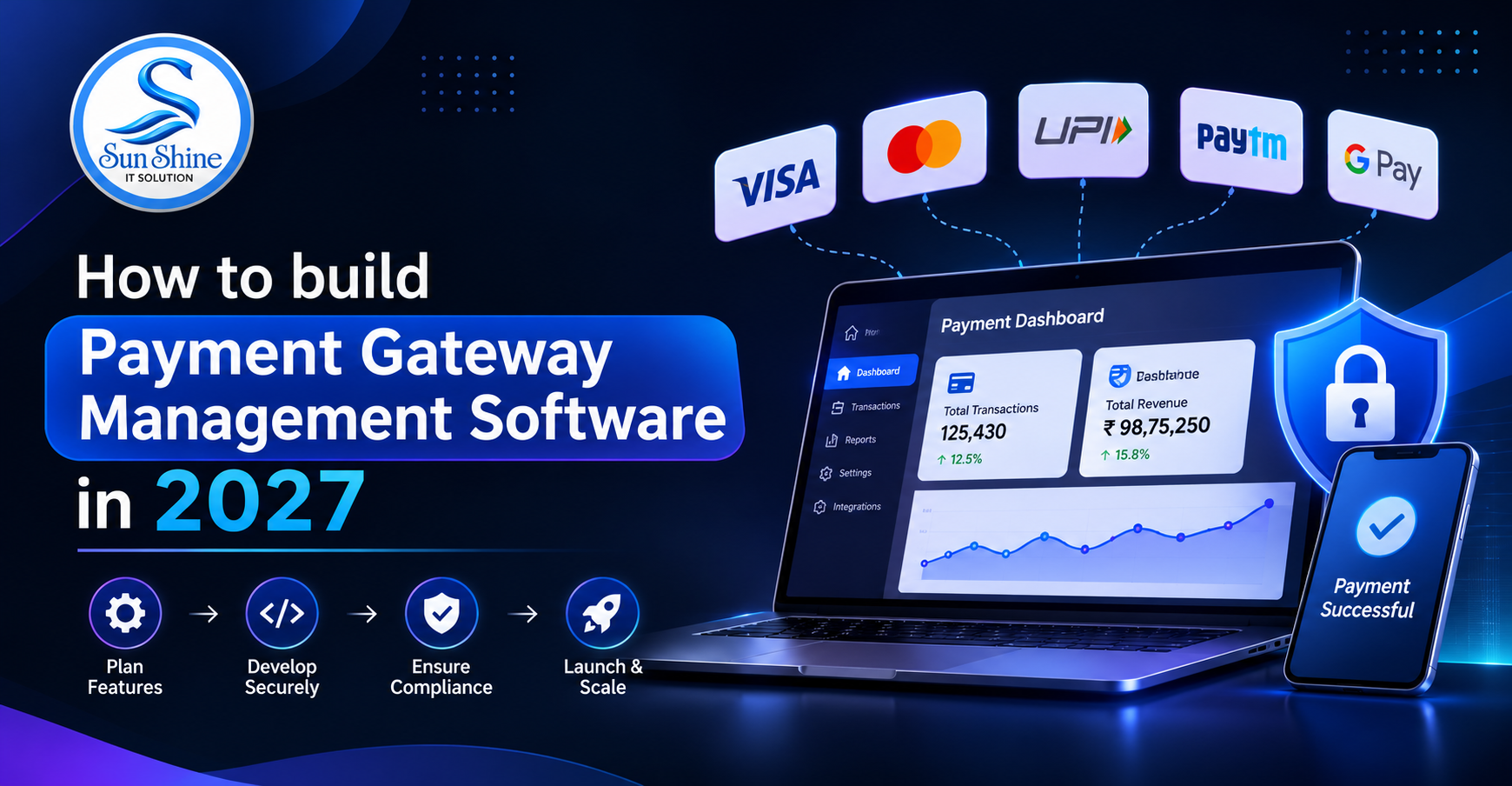
In this guide, Sun Shine IT Solution explains the essential steps, features, technologies, costs, and benefits of developing an online medicine delivery application.
Introduction
The healthcare industry is rapidly embracing digital technology, making it easier for customers to order medicines and healthcare products from their smartphones. Online medicine delivery platforms allow users to search for medicines, upload prescriptions, place orders, make online payments, and receive medicines at their doorsteps.
For pharmacies and healthcare businesses, developing an online medicine delivery platform is an excellent opportunity to expand their services, reach more customers, and simplify order management.
But how do you build a successful online medicine delivery platform? What features, technologies, and development processes are required?
In this guide, Sun Shine IT Solution explains the essential steps, features, technologies, costs, and benefits of developing an online medicine delivery application.
What Exactly Are You Building?
Before starting development, understand the difference between three payment technology solutions.
|
Solution |
Main purpose |
|---|---|
|
Payment Gateway |
Connects businesses with payment processing services. |
|
Payment Orchestration Platform |
Connects multiple payment gateways through one centralized system. |
|
Payment Gateway Management Software |
Manages gateway connections, transactions, payment settings, reports, and operational activities. |
For businesses planning a modern payment management platform in 2027, combining gateway management with payment orchestration can provide greater flexibility.
How Does Payment Gateway Management Software Work?
Imagine an eCommerce business connected to three payment gateways.
Instead of managing each gateway separately, the business uses one centralized platform to control payment operations.
The typical workflow looks like this:
- A customer initiates an online payment.
- The application sends the transaction request to the management platform.
- The system checks payment method, currency, gateway availability, and routing rules.
- The selected gateway processes the transaction.
- The system receives and verifies the payment response.
- Transaction status is updated in the central dashboard.
- Settlement and reconciliation records are updated.
- The merchant can monitor the complete payment lifecycle.
This approach helps businesses manage multiple payment providers without maintaining separate operational dashboards.
Core Modules Required for Payment Gateway Management Software
Instead of building everything as one large application, divide the platform into independent modules.
A. Gateway Connection Manager
This module manages connections with different payment providers.
Features:
-
Multiple gateway integration.
-
API credential configuration.
-
Gateway activation and deactivation.
-
Provider status monitoring.
-
Test and production environments.
-
Gateway configuration management.
B. Unified Transaction Engine
This is the central component responsible for processing and tracking payment requests.
Features:
-
Transaction creation.
-
Unique transaction identification.
-
Payment status tracking.
-
Transaction history.
-
Duplicate request prevention.
-
Provider response management.
C. Intelligent Payment Routing
This module selects the appropriate gateway according to predefined business rules.
For example:
-
Route UPI transactions to a suitable provider.
-
Select gateways based on supported currencies.
-
Prefer providers with better availability.
-
Apply transaction-specific routing rules.
-
Use controlled failover when supported.
Smart routing can help improve transaction performance and reduce unnecessary processing costs.
Zuora Product Documentation+1
D. Settlement and Reconciliation Manager
This module compares internal transaction records with payment provider settlement information.
Features:
-
Settlement tracking.
-
Automated reconciliation.
-
Payment fee calculations.
-
Pending settlement reports.
-
Refund reconciliation.
-
Transaction mismatch identification.
E. Refund and Dispute Management
Businesses need a centralized way to manage refunds and payment disputes.
Features:
-
Full and partial refunds.
-
Refund status tracking.
-
Dispute records.
-
Chargeback monitoring.
-
Transaction investigation.
-
Refund reports.
F. Merchant Management
For platforms serving multiple businesses, this module manages merchant accounts.
Features:
-
Merchant registration.
-
Merchant verification workflows.
-
Merchant-specific gateway configuration.
-
Transaction limits.
-
Account status management.
-
Merchant-wise reports.
G. Analytics and Reporting
Provide administrators with financial and operational insights.
Important metrics include:
-
Total transaction volume.
-
Successful payment rate.
-
Failed transaction rate.
-
Gateway-wise performance.
-
Refund volume.
-
Settlement status.
-
Processing fees.
-
Average transaction value.
H. Notification and Alert System
Automate notifications for:
-
Payment success and failure.
-
Gateway downtime.
-
Settlement delays.
-
Refund updates.
-
Suspicious transactions.
-
API errors.
Technology Stack for 2027 Payment Software Development
The technology stack should support high transaction volumes, reliable integrations, secure processing, and future expansion.
|
Component |
Recommended technologies |
|---|---|
|
Frontend |
React.js, Next.js |
|
Backend |
Node.js, Java, .NET |
|
Database |
PostgreSQL, MySQL |
|
Cache |
Redis |
|
Message Queue |
Apache Kafka, RabbitMQ |
|
Cloud Infrastructure |
AWS, Azure |
|
API Communication |
REST APIs, Webhooks |
|
Monitoring |
Prometheus, Grafana |
|
Containerization |
Docker, Kubernetes |
|
Security |
Encryption, MFA, OAuth 2.0 |
Technology selection tip: Avoid choosing technologies only because they are trending. Select them according to transaction volume, reliability requirements, integration complexity, and development budget.
Development Challenges and Their Solutions
|
Development challenge |
Recommended approach |
|---|---|
|
Multiple gateway APIs |
Standardized connector architecture |
|
Duplicate payments |
Idempotency and transaction validation |
|
Gateway downtime |
Health monitoring and controlled failover |
|
Payment status mismatch |
Webhook verification and reconciliation |
|
Fraudulent transactions |
Risk rules and transaction monitoring |
|
High transaction volume |
Scalable infrastructure |
|
Settlement differences |
Automated reconciliation |
|
Sensitive data exposure |
Tokenization and access controls |
Testing Before Launching Your Payment Platform
Payment software requires more than ordinary application testing.
Test the following scenarios:
- Successful transactions.
- Declined transactions.
- Payment timeouts.
- Duplicate payment requests.
- Gateway downtime.
- Delayed webhooks.
- Refund processing.
- Partial refunds.
- Settlement mismatches.
- Unauthorized API requests.
- High-volume transactions.
Testing should also verify that the platform does not create duplicate charges when users retry payments or when gateway responses are delayed.
How Much Does Payment Gateway Management Software Cost?
The development budget depends on the platform's complexity and business requirements.
Consider these cost factors:
|
Development component |
Cost dependency |
|---|---|
|
Admin dashboard |
Design and reporting requirements |
|
Gateway integrations |
Number and complexity of providers |
|
Transaction engine |
Processing and workflow complexity |
|
Smart routing |
Routing rules and failover logic |
|
Reconciliation |
Provider settlement formats |
|
Security |
Compliance and protection requirements |
|
Cloud infrastructure |
Expected transaction volume |
|
Testing |
Integration and performance requirements |
A basic gateway management dashboard and an enterprise payment orchestration platform have very different development requirements.
The best approach is to prepare a detailed project estimate after defining the complete scope.
What Is the Future of Payment Management Software in 2027?
The next generation of payment platforms will increasingly focus on automation, intelligent decision-making, and stronger security.
Some important technology directions include:
AI-Assisted Fraud Detection: Analyze transaction patterns to identify potentially suspicious activity.
Intelligent Payment Routing: Use historical gateway performance and predefined rules to select suitable processing providers.
Real-Time Financial Analytics: Provide faster visibility into transactions, settlement status, and payment performance.
Automated Reconciliation: Match transaction and settlement records with reduced manual effort.
API-First Payment Infrastructure: Make integrations easier for eCommerce, SaaS, banking, and enterprise applications.
Advanced Authentication: Support secure authentication methods according to applicable payment regulations and provider capabilities.
These developments can help businesses build more flexible and efficient payment ecosystems.
Why Choose Sun Shine IT Solution for Payment Software Development?
Building payment management software requires a combination of software engineering, API integration, database architecture, and security-focused development.
Sun Shine IT Solution helps startups and businesses transform their ideas into customized digital products.
Our software development services include:
-
Custom Payment Management Software.
-
Payment Gateway Integration.
-
Financial Management Software.
-
Transaction Management Systems.
-
SaaS Application Development.
-
API Development and Integration.
-
Admin Dashboard Development.
-
Business Automation Software.
-
Web and Mobile Application Development.
-
Software Maintenance and Support.
We focus on understanding your business requirements and developing solutions with suitable functionality, technology, and architecture.
Whether you want to build a payment management dashboard, a multi-gateway orchestration platform, or a customized financial application, our team can help you plan your software project.
Conclusion: Build Smarter Payment Infrastructure for 2027
Payment Gateway Management Software is becoming an important technology solution for businesses handling digital transactions across multiple platforms.
A well-designed system can bring gateway integrations, transaction monitoring, payment routing, refunds, settlements, and analytics together in one centralized platform.
However, building reliable payment software requires more than connecting APIs. It requires a strong architecture, secure transaction handling, proper reconciliation, reliable integrations, and regulatory awareness.
Planning to develop your own Payment Gateway Management Software?
Partner with Sun Shine IT Solution to transform your fintech idea into a customized digital solution.